Rising temperatures and the extension of warm seasons have caused practical challenges for dog owners in many regions. Heat stress is no longer just an occasional issue under extreme climatic conditions, it has become a tangible factor affecting daily life, outdoor activity planning, and the overall comfort of dogs. As awareness of dogs’ sensitivity to high temperatures grows, the global pet market is steadily increasing its demand for effective and user-friendly cooling solutions.
Cooling vests for dogs have evolved into a practical product category, directly and wearably addressing these challenges. Designed to support thermoregulation during canine activity, these vests offer distinct advantages over static cooling products suitable only for resting scenarios. However, their effectiveness depends not only on the cooling concept itself but also on the synergy of materials, structure, and fit in real-world use.
In this guide, we will explore the key advantages of cooling jackets for dogs and share insights from a manufacturing perspective. The focus is not on short-term trends but rather on providing a clear and practical definition for the category, along with information to help B2B buyers make informed purchasing decisions, ensuring the stability and sustainability of the product line.
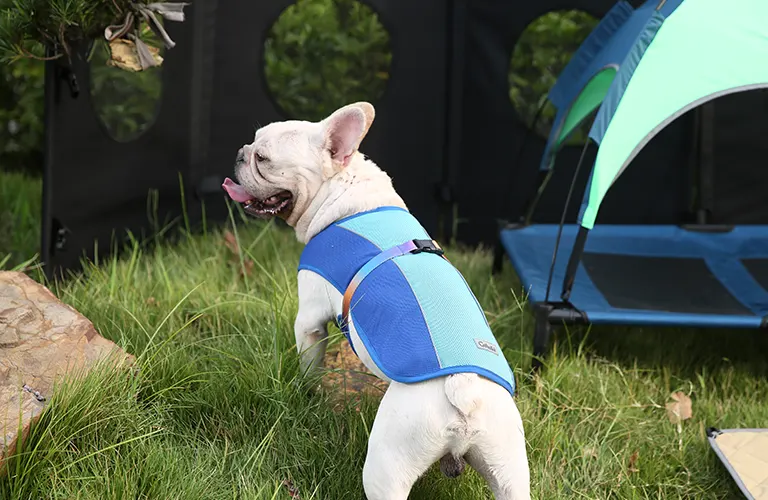
How Dog Cooling Shirts Function in Daily Use
Dog cooling shirts are designed to support canine thermoregulation by helping dissipate excess body heat in hot or high-activity environments. Unlike passive cooling accessories that only function when the dog is resting, cooling shirts must remain effective during movement, making their real-world performance highly dependent on both material behavior and garment structure.
Most cooling shirts use evaporative cooling as their core mechanism. When the fabric is moistened, heat is absorbed and released through evaporation as air passes over the surface. The effectiveness of this process depends on a controlled balance between water absorption, breathability, and drying speed. Materials that retain too much moisture may become heavy or uncomfortable, while fabrics that dry too quickly can limit cooling duration. Achieving consistent, repeatable performance is therefore a central challenge in product development.
Beyond materials, structural design plays a critical role in cooling efficiency. Panel layout, layering methods, and contact surface area all affect how evenly cooling is distributed across the dog’s body. Poorly designed shirts may restrict movement or concentrate cooling in limited areas, reducing comfort and practicality. Well-engineered designs take joint movement, flexibility, and pressure points into account to maintain stable performance during walking, training, or outdoor use.
Fit accuracy further determines cooling effectiveness. Even high-performance cooling fabrics cannot function properly without correct sizing and pattern design. Precise grading ensures adequate surface contact without excessive compression, supporting both cooling efficiency and long-term wearing comfort.
From a manufacturing perspective, reliable cooling performance results from multiple factors working together rather than a single feature alone. Material selection, pattern accuracy, and production consistency all influence whether a cooling shirt can deliver dependable performance at scale. Understanding these fundamentals helps B2B buyers evaluate cooling shirts as market-ready products designed for real-world use.
The Benefits of Cooling Jackets for Dogs
When designed and manufactured properly, cooling vests can provide significant benefits for dogs in various usage scenarios. Their value lies not only in the cooling effect itself but also in its ability to remain stable and consistent across different breeds, climates, and activity levels.
Reduce the Risk of Heat Stress
Dogs are less capable of regulating their body temperature compared to humans, making them particularly prone to overheating in hot weather. Cooling vests facilitate heat dissipation by maintaining cooler contact surfaces on a dog’s core body areas. When combined with suitable fabric performance and precise fit, they help reduce the risk of heat stress during walks, training, travel, and prolonged outdoor exposure.
Stay Comfortable During The Event
Compared to static cooling products, a key advantage of cooling vests is their effectiveness even when the dog is moving. Thoughtfully designed cooling vests remain lightweight when wet, allow airflow, and avoid restricting natural movement. This enables dogs to stay active for extended periods without discomfort, which is particularly important for working dogs, large breeds, and highly active dogs.
Practical and Reusable Cooling Solution
The cooling vest is designed for easy reuse and simple operation. Most models can activate the cooling function with just water, requiring no electricity, disposable liners, or complex maintenance. This convenience enhances consumer acceptance and supports seasonal reuse, delivering stable sales performance for brands and key buyers.
Multi-Functionality Suitable for Various Dog Breeds and Usage Scenarios
Through proper sizing and structural design, cooling vests can accommodate various dog breeds and body types. They are suitable for daily walks, outdoor trips, training environments, and leisure activities. This versatility enables the brand to position cooling vests as a multipurpose summer product rather than a niche accessory.
Compared to single-use or ready-to-use cooling products, cooling jackets better align with current consumer expectations for durability, reusability, and responsible product design. For corporate purchasers, this translates to lower return rates, clearer product positioning, and stronger long-term category growth potential.
Manufacturing Considerations When Purchasing Cooling Coats
Purchasing cooling dog coats is not just about choosing a visually appealing design. The performance, consistency, and long-term reliability of a product largely depend on the manufacturing decisions made before mass production begins.
Fabric Performance and Material Selection
The effectiveness of the cooling pet coat largely depends on the material performance during actual use. Key performance factors include water absorption, breathability, drying speed, and weight retention ability when wet. Uneven material ratios may make people feel heavy, rapidly decrease cooling efficiency, or cause discomfort when wearing. Stable fabric procurement and performance testing are crucial to ensure consistency in results across different production batches.
Pattern Design and Dimensional Accuracy
Cooling performance is closely related to adhesion. Even small deviations in pattern design or size grading can reduce surface contact area, thereby limiting cooling efficiency. Accurate patterns, clear size standards, and repeatable cutting processes help ensure that each component works as expected, especially when the product is produced on a large scale in different sizes or regions. Building quality and durability
The cooling dog kit will undergo repeated processes of wetting, drying, and moving. The strength of the suture, the position of the suture, and the edge treatment all affect the durability of the product during use. Weak structure may lead to deformation, reduced comfort, or premature damage after washing. In the process of material selection and production planning, the pressure brought by these factors must be taken into account.
Cleanability and Long-term Use
Reusable cooling pet kits need to maintain performance even after multiple washing cycles. Fabric stability, color fastness, and shape retention should be evaluated under actual care conditions such as temperature, washing frequency, etc. Products that can maintain consistent performance over the long term are more likely to gain stable market recognition and reduce after-sales problems.
Quality Control and Production Consistency
Cooling kits for dogs are usually manufactured during seasonal production, so consistency is particularly important. Clear quality standards, process inspections, and final inspections help ensure that products delivered at different stages of production in different seasons meet the same expected standards. For B2B buyers, this consistency directly affects scalability and long-term cooperation.
Selected Petstar Cooling Jacket
To illustrate how manufacturing considerations are translated into actual products, Petstar has developed a range of cooling jackets aimed at meeting different market and usage needs. Each solution focuses on functional performance, fit, and production consistency, rather than short-term trends.
Efficient Cooling for Active Dogs
This cooling jacket prioritizes heat reduction through advanced fabric technology and smart structural design. It helps dogs release heat quickly in high-temperature environments, reducing the risk of heat stress. The jacket blocks direct solar radiation while maintaining breathability. Key materials include cooling-effect fabric and breathable mesh, which work together to keep dogs comfortable and cool during outdoor activity.
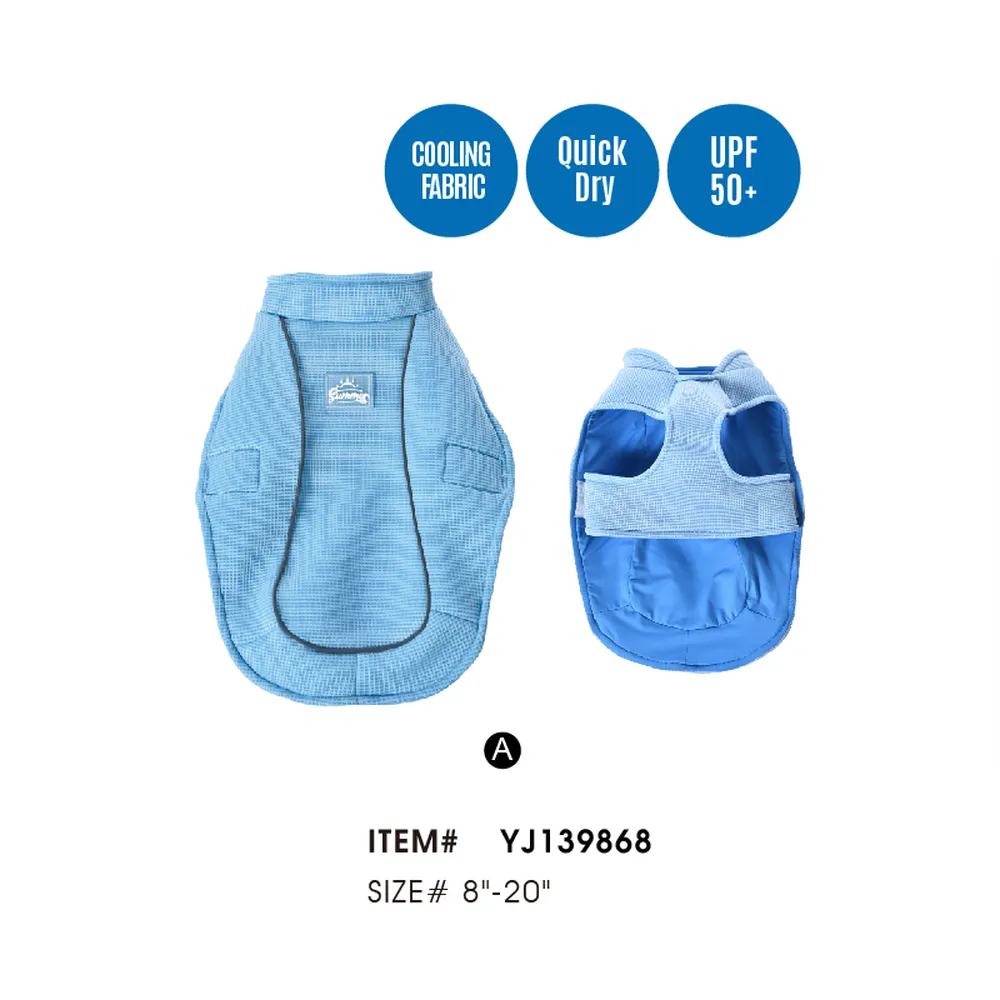
Triple-Layer Cooling Vest
This vest features a three-layer design for optimal cooling and comfort. The outer layer uses breathable mesh to promote airflow, the middle layer contains thin absorbent cotton to manage moisture, and the inner layer is made of cooling, water-resistant fabric to maintain body temperature while preventing excess wetness. Together, these layers help dogs stay cool, dry, and comfortable during outdoor activity.